Solar System

Earth’s natural satellite

The Moon

The Moon moves around Earth and reflects sunlight. It does not make its own light, but it can look very bright in the night sky.

Quick read:
The Moon moves around Earth. It reflects sunlight.
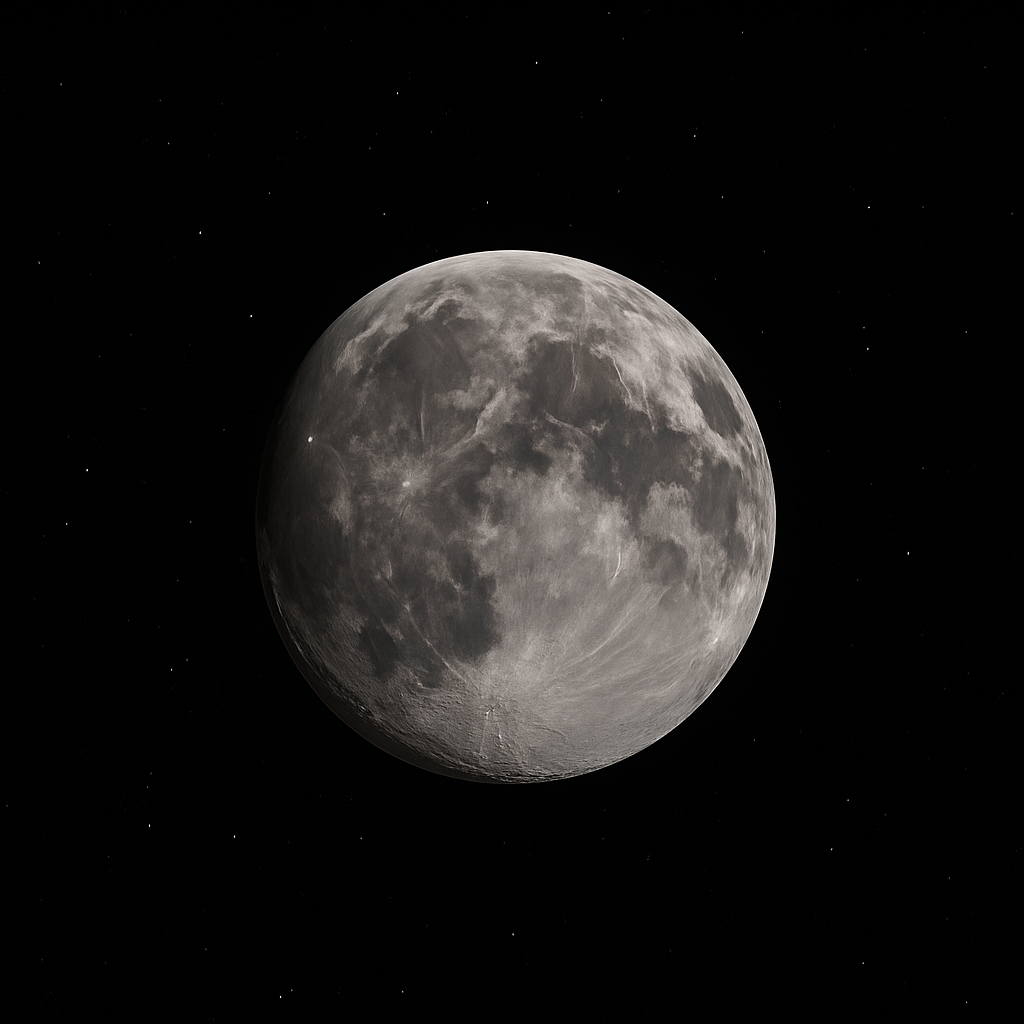
A gray cratered Moon floating in dark space.

The Moon is Earth’s natural satellite and the brightest object in many night skies.

Image description

A gray cratered Moon floating in dark space.

The Moon is Earth’s natural satellite and the brightest object in many night skies.

What the Moon does

The Moon circles Earth and changes position in the sky. As it moves, we see different sunlit parts of it, which creates the familiar phases.

Why the Moon matters to Earth

The Moon affects tides and has shaped human timekeeping, stories, and skywatching for a very long time. It is also the closest world beyond Earth.

What the Moon is like

The Moon has a dusty, cratered surface. It has dark plains and brighter highlands, and it has no thick atmosphere like Earth does.

How to picture it

Imagine a gray rocky sphere close to Earth, bright in the night sky, with changing phases from new moon to full moon.

Why is the writing so clear and direct?

The site is built for readers who want calm explanations first. Each page starts with the basics and then adds more detail in short blocks.

Why is this page built in blocks?

The blocks let the reader take the page in small steps. You can read one idea at a time and still keep the next button in view.