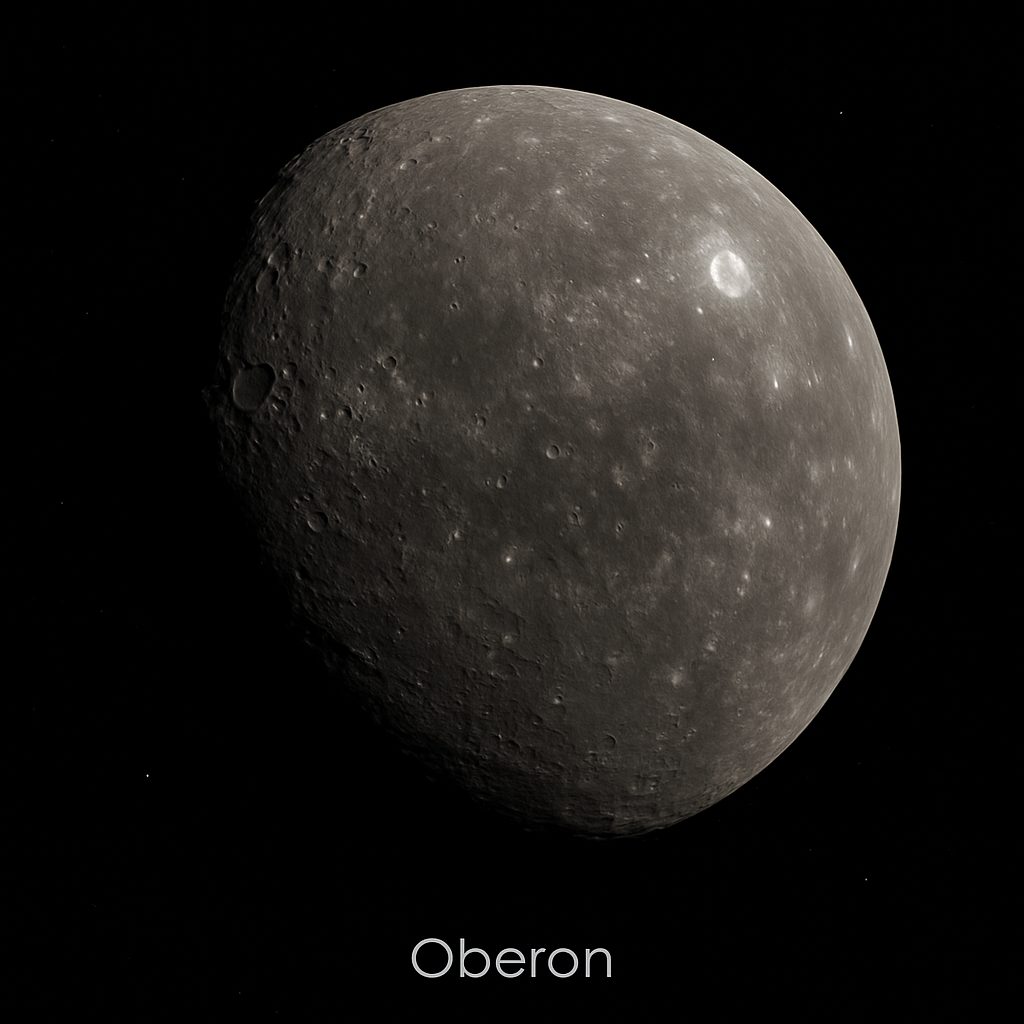
Oberon at a glance
What kind of world is this?
Oberon is part of a moon system rather than a planet orbiting the Sun directly. Moons can be rocky, icy, cratered, geologically active or wrapped in thick atmospheres. This page places Oberon in that larger family so the object makes sense instead of appearing as an isolated name.
What should you look for?
Pay attention to surface colour, craters, bright ice, dark terrain and the relationship with the parent planet. Images of moons are often processed to make structure easier to see, so colour should be treated as a guide rather than a perfect view with the human eye.
Why do astronomers study it?
Moons preserve records of impacts, tidal heating and the history of planetary systems. Studying Oberon helps astronomers compare how very different environments can develop around the same planet.
From the original archive
This English guide is part of the rebuilt VisibleGalaxies archive and uses topic and visual material from the supplied source site.